
Learning to
Feel Everything,
Balance Everything,
and Thrive
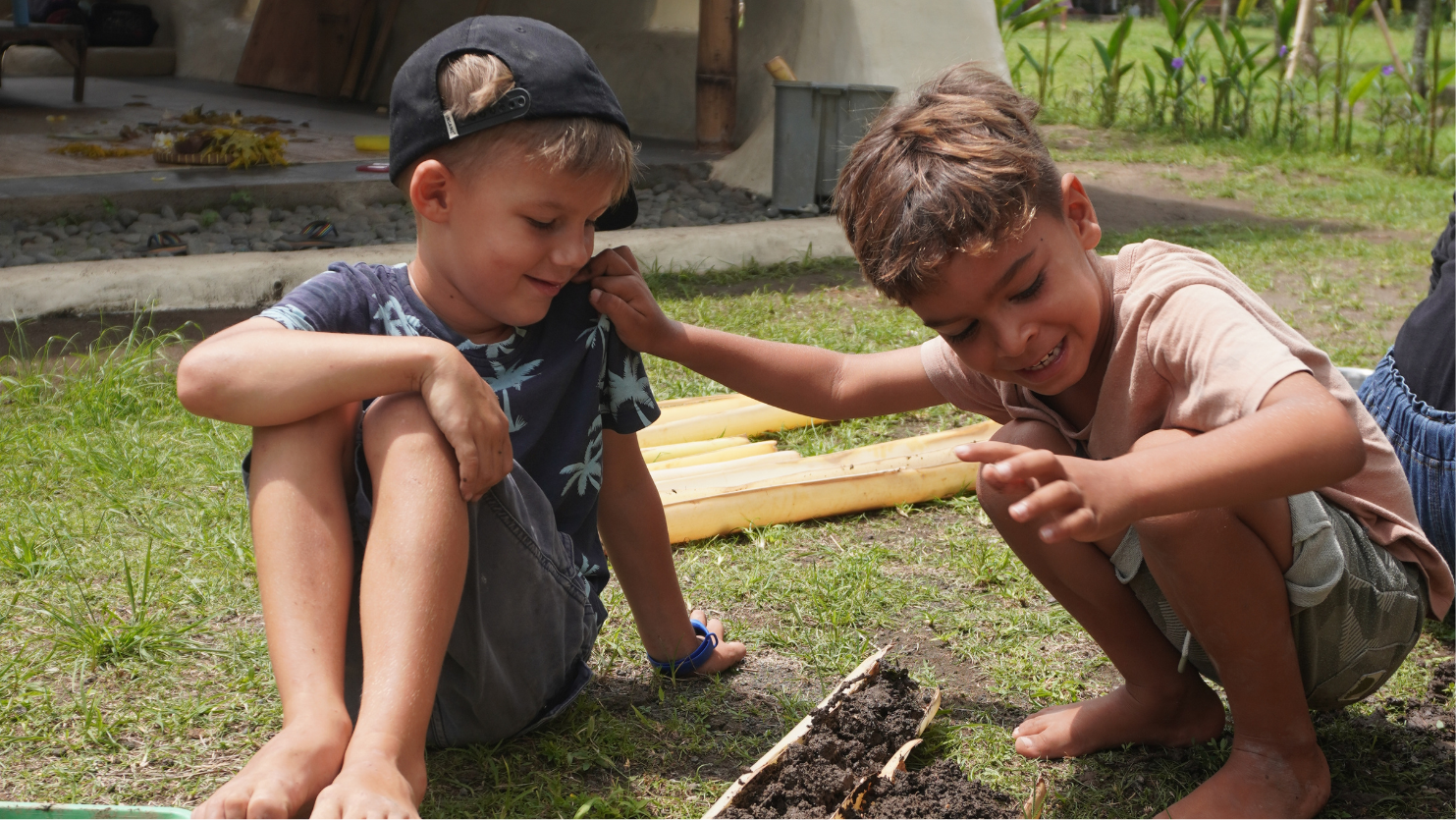
Children who can hold all their feelings become adults who can hold anything. When every emotion is welcome—from rage to joy, from shadow to light—children discover an unshakeable foundation for life.

It Takes a Village to Raise a Child
Open Flow's intentional village builds emotional freedom. Carefully woven practices—across the environment, who holds the space, daily regulation, and developmental rhythm—create the conditions where children learn to hold all their feelings.
The
Environment
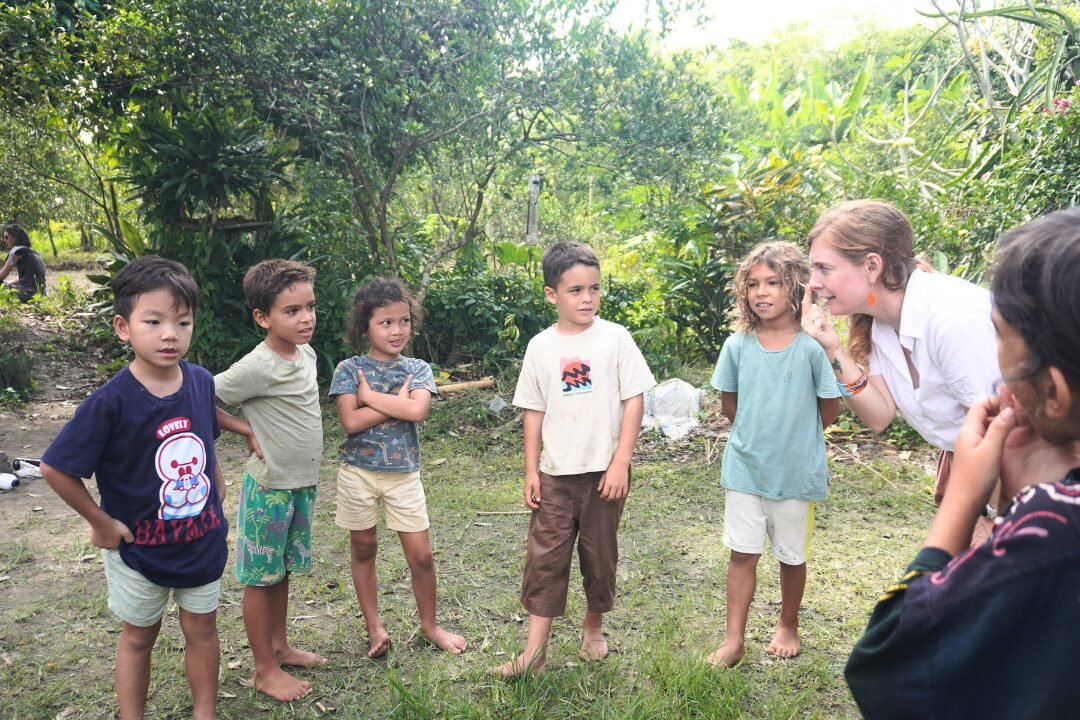
Welcoming All Emotions
Nature as Regulator
Balinese Spiritual Practices
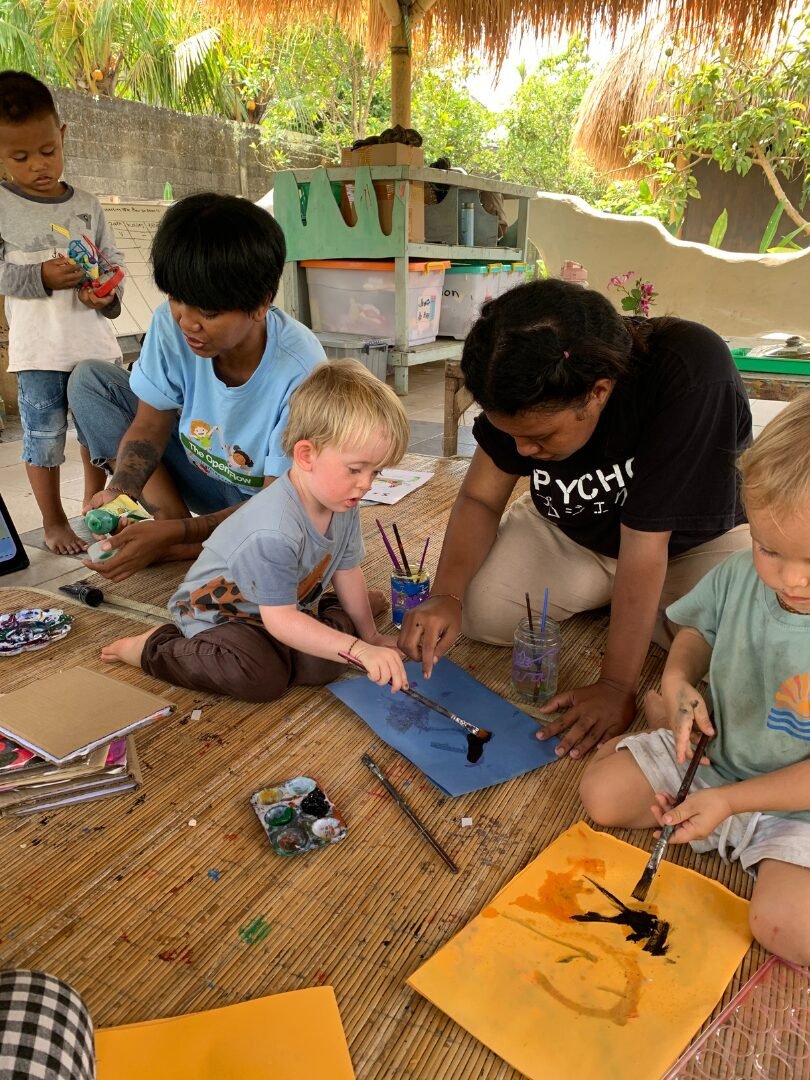
Family Co-Work and Co-Regulation
Educators as Flow Guardians
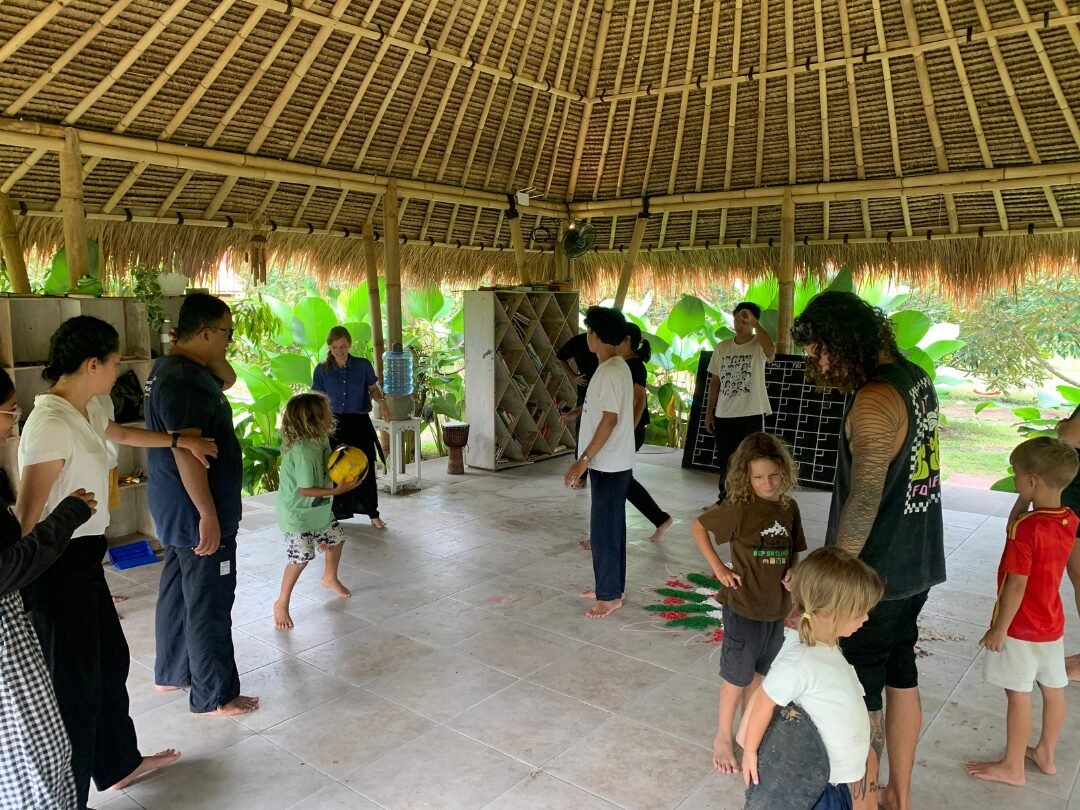
Mixed-Age Community
Stillness and Integration
Music and Rhythm
Physical Movement
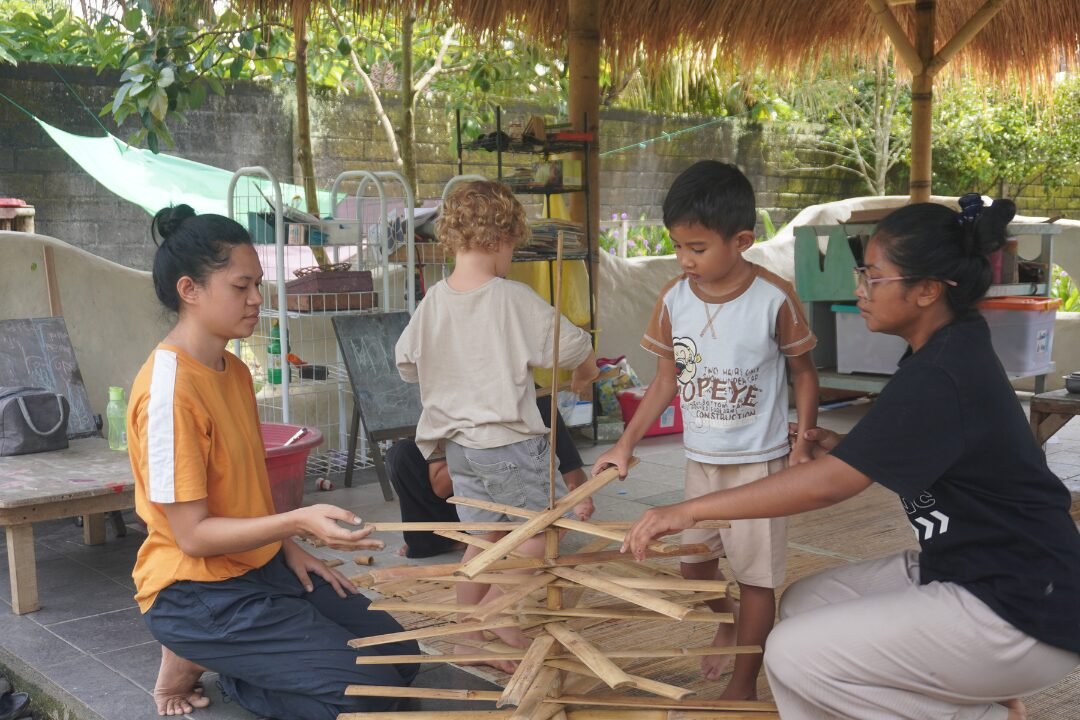
Wonder through Play to Projects
Growth without Comparison
Never Behind, Never Ahead
Seven-Cycle Year
How Open Flow Relates to Educational Lineages
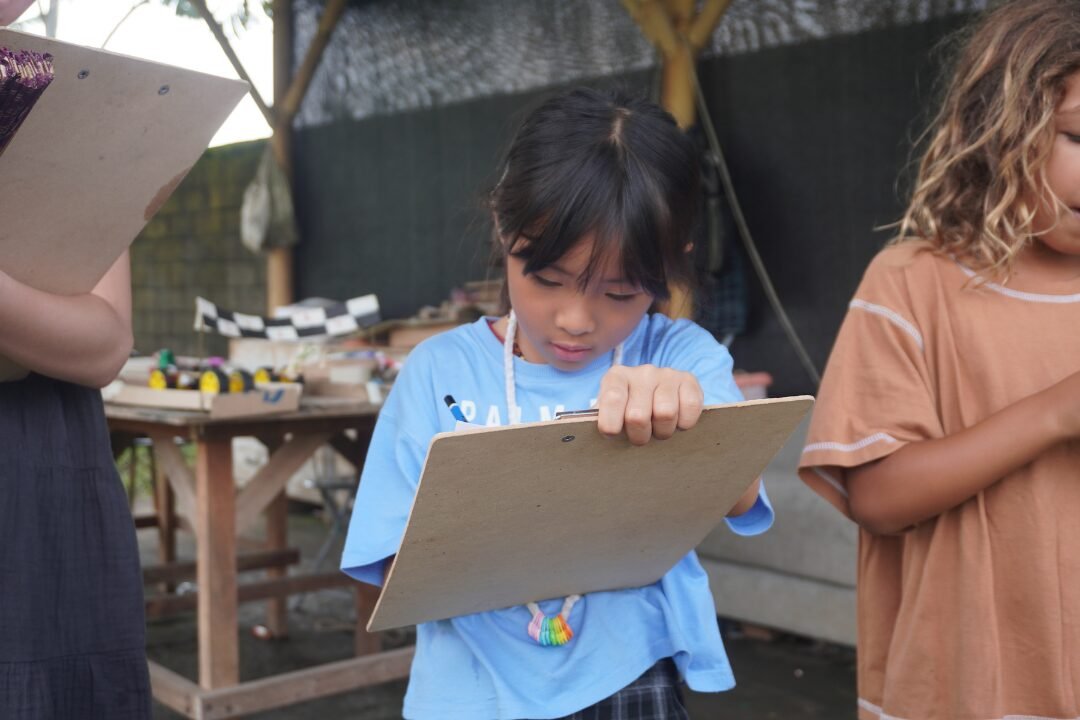
Steiner / Waldorf
Montessori
Reggio Emilia
Forest School
Mainstream School
Rich imagination, rhythm, deep inner life
Limitation:
Sometimes rigid, emotional work implicit
How Open Flow Evolves It: We keep rhythm and imagination, remove dogma, and add explicit emotional and nervous-system science.
Independence, order, concentration
Limitation:
Emotional expression often minimised
How Open Flow Evolves It: We keep autonomy but centre co-regulation, mixed ages, and emotional safety before independence.
Expression, relationships, environment as "third teacher"
Limitation:
Less clear developmental scaffolding
How Open Flow Evolves It: We keep relational depth and expressive arts, and add clear developmental stages and polyvagal-informed practice.
Nature, resilience, risk competence
Limitation:
Limited emotional literacy focus
How Open Flow Evolves It:
We use nature as regulator and layer in daily emotional tools and integrated project learning.
Structure, predictability
Limitation:
High anxiety, forced timelines, comparison
How Open Flow Evolves It:
We replace pressure with rhythm, safety, and personalised developmental flow.
Development Across Ages
Ages 2–4
Ages 4–7
Ages 7–10
Ages 10-12
Research Foundations
Open Flow, Bali reimagines education from the ground up—honouring how children naturally learn, protecting their innate curiosity, and nurturing whole human beings. Explore what makes us different.
Open Flow, Bali reimagines education from the ground up—honouring how children naturally learn, protecting their innate curiosity, and nurturing whole human beings. Explore what makes us different.
Open Flow, Bali reimagines education from the ground up—honouring how children naturally learn, protecting their innate curiosity, and nurturing whole human beings. Explore what makes us different.
Ages 4–7
Ages 7–10
Ages 10-12
Research Foundations
Open Flow, Bali reimagines education from the ground up—honouring how children naturally learn, protecting their innate curiosity, and nurturing whole human beings. Explore what makes us different.
Open Flow, Bali reimagines education from the ground up—honouring how children naturally learn, protecting their innate curiosity, and nurturing whole human beings. Explore what makes us different.
Open Flow, Bali reimagines education from the ground up—honouring how children naturally learn, protecting their innate curiosity, and nurturing whole human beings. Explore what makes us different.
Discover Open Flow
Open Flow, Bali reimagines education from the ground up—honouring how children naturally learn, protecting their innate curiosity, and nurturing whole human beings. Explore what makes us different.
Home
Flow
Wonder Arc
Emotions
feel everything,
balance everything,
and thrive
Nature
Rhythm
Growth
Belong
Begin