
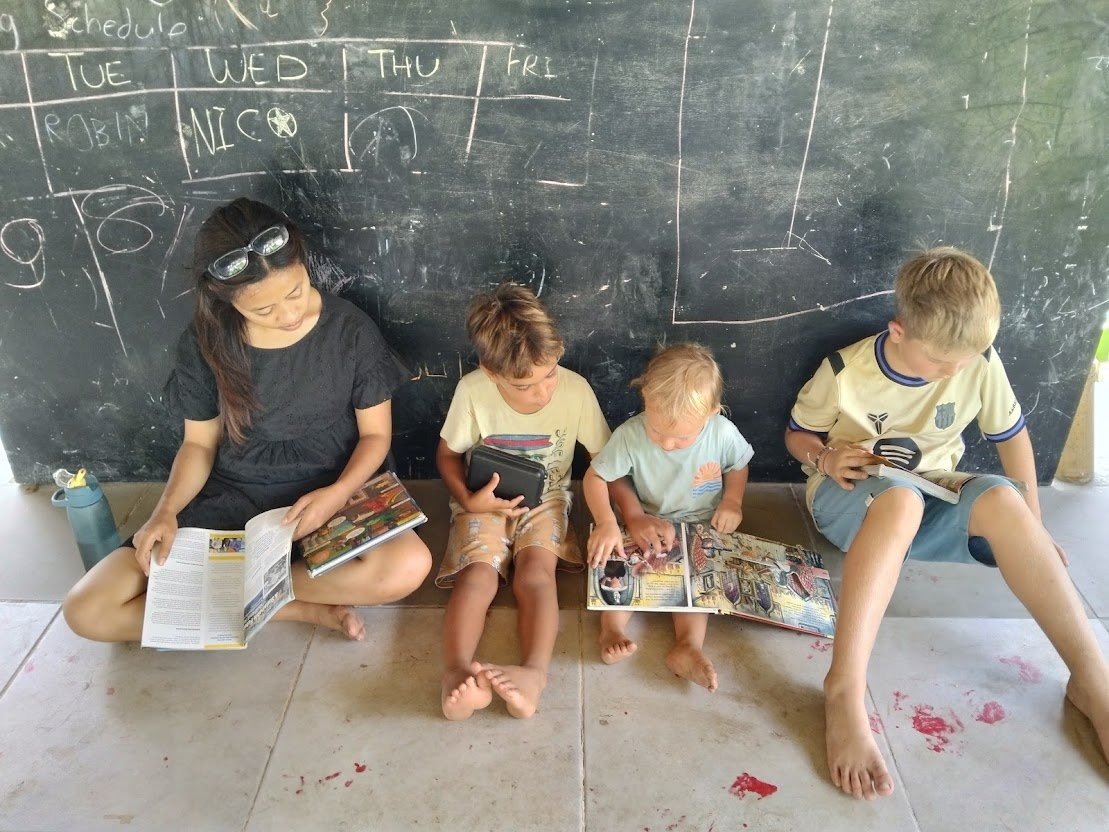
Progressive Education where learning feels like breathing
When children fall in love with learning, that love lasts a lifetime. Centuries of Steiner, Montessori and Reggio Emilia wisdom, and decades of research confirm: flow is where this love begins.

Flow at
Open Flow
Flow is effortless learning—children drop into deep focus, fully alive in what they're doing. We remove bells, schedules, comparison, constant direction—so children stay fully absorbed in their play and self-directed projects.
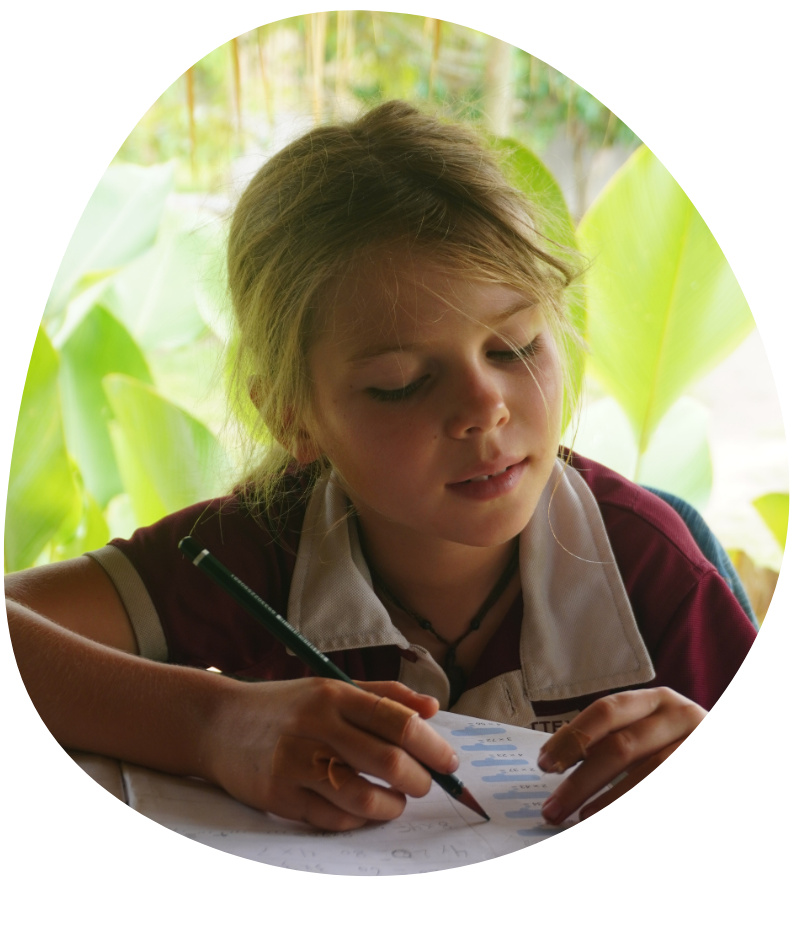
Age 4 · Emotional Intelligence
Age 5 · Concentration
Age 7 · Observation
Age 10 · Real-World Problem Solving
Group · Collaboration
Group · Nature Connection
Open Flow's
Considered Approach
We blend the best of Steiner/Waldorf, Montessori, Reggio Emilia, Forest School and age-appropriate Adaptive AI — each protecting and extending flow in different ways.
Steiner/Waldorf
Montessori
Reggio Emilia
Forest Schools
Adaptive AI
The Science Behind Flow
Research is clear: flow emerges when three core needs are protected.
Competence
Autonomy
Relatedness
Flow and your Child's Future
Flow shapes the developing brain. Building capacities that last a lifetime.
Deep Dives Into Flow And Pedagogy
- Our Approach—Why We Trust
Because science, proven pedagogy, and lived experience all point in the same direction.
Flow-based learning stands on three foundations:
Research: From Mihaly Csikszentmihalyi’s flow theory to Self-Determination Theory (Deci & Ryan) to Polyvagal Theory (Stephen Porges), the conclusion is consistent—children thrive when they feel autonomous, capable, supported, and safe. Neuroimaging studies from the past two decades confirm that during flow states, focus strengthens, distraction drops, creativity rises, and learning accelerates.
Proven pedagogies: Long before brain scans existed, Steiner, Montessori, Reggio Emilia and Forest Schools each discovered practices that protect flow—long work cycles, real choice, mixed-age communities, hands-on sensory-rich materials, nature immersion, project-based inquiry, and readiness-timed academics. These are flow conditions in disguise.
Emerging insights: We stay curious—not credulous. We explore developing areas like rhythm, breath, heart coherence, and attention states with one filter: Does this help children regulate, stay present, and re-enter flow more easily? If yes, we use it. If not, we don’t.
- The Neuroscience of Flow
Why the brain learns best when children feel absorbed, safe, and deeply interested.
Flow is not a mood—it’s a neurobiological state where the brain becomes fully available for learning.
The thinking brain quiets so focus can deepen. In flow, the prefrontal cortex—the part that worries, self-monitors and tracks time—softens. Children stop second-guessing themselves. They become calm, confident, and naturally persistent.
The attention systems snap into alignment. Three neural networks work together: one holds steady focus, one filters distractions, and one quiets mind-wandering. This is why absorbed children tune out noise and stay with something far longer than usual.
The brain releases a powerful “learning cocktail.” Dopamine, norepinephrine, anandamide and endorphins rise. This mix increases pattern recognition, motivation, and creativity—and makes effort feel enjoyable.
Learning becomes faster and more intuitive. During flow, the brain shifts into implicit learning mode, where the cerebellum takes over and skills “land” quickly. A short period of true flow can be as effective as much longer periods of traditional instruction.
Safety unlocks all of this. Flow only appears when the nervous system feels safe, connected and unhurried. Comparison, pressure, and frequent interruption push children out.
How we design for it: Clear goals, immediate feedback, meaningful choices, natural challenges, and long, quiet work cycles—these are the conditions where flow reliably reappears.
- The Flow Channel—Keeping Children on Their Growing Edge
Children enter flow when challenge rises just enough to feel exciting but not enough to feel overwhelming. Too much challenge creates anxiety. Too little creates boredom. The right balance creates deep, effortless focus.
Under the surface, this balance regulates motivation, alertness, working memory load, emotional safety, and sensory readiness.
Why anxiety kills flow: When tasks feel too hard, the amygdala activates, attention scatters, and children become reactive rather than curious.
Why boredom kills flow: When tasks feel too easy, novelty drops, dopamine falls, and focus dissolves.
How we maintain the flow channel: We step in lightly and wisely—simplifying when frustration spikes, adding layers when boredom appears, changing materials or peers to renew interest, and protecting long, uninterrupted stretches once a child is absorbed.
Flow is not an accident—it is a continuously tuned state.
- Steiner/Waldorf—Flow Through Rhythm, Story & Readiness
Steiner protected flow by shaping an environment where children feel settled, imaginative, and developmentally aligned.
Rhythm regulates the nervous system. Predictable daily and seasonal rhythms reduce uncertainty and help children relax into their work. A regulated child enters flow more easily.
Imagination comes before abstraction. Stories, imagery and movement create a warm, immersive space where attention stays fluid and engaged. Young children think in pictures—not symbols—so this protects their natural learning language.
Readiness matters. Introducing reading, writing and maths when the child is truly ready keeps learning inside competence, not anxiety. This is core to maintaining the flow channel.
How we use it: We borrow rhythmic days, movement before concentration, story arcs, seasonal cues, and gentle introductions to academic skills.
Steiner’s gift is not mysticism—it’s deep understanding of children’s readiness and regulation, which are the foundation of flow.
- Montessori—Flow Through Autonomy & Deep Focus
Montessori is one of the most flow-friendly systems ever created.
Choice fuels focus. When children choose their own work, motivation rises and concentration lengthens. Dopamine increases simply from having agency.
Sensitive periods mirror brain plasticity windows. Montessori observed something neuroscience later confirmed—children go through temporary windows where a specific skill becomes almost effortless. Meeting these windows creates fast, joyful learning.
Materials that teach through feedback. Montessori tools contain “control of error.” The material itself gives feedback—the adult doesn’t need to interrupt. This preserves concentration.
How we use it: Prepared environments designed for independent flow, adults who observe more and speak less, space for repetition, and mixed-age groups that reduce comparison stress.
Montessori offers the architecture of uninterrupted focus—exactly what flow requires.
- Reggio Emilia—Flow Through Curiosity, Collaboration & Expression
Reggio sustains flow by letting curiosity lead and giving children many ways to express what they’re discovering.
Projects begin with genuine questions. When children explore something they truly care about, their attention becomes self-propelled.
Documentation makes learning visible. Photos, sketches, quotes and prototypes help children see the path they’re on. This externalizes working memory—reducing cognitive load—and allows children to hold complex ideas longer without overwhelm. What began as scattered exploration becomes a visible story of thinking, which deepens engagement and enables reflection.
The “100 languages” expand possibility. Drawing, building, sculpting, mapping, storytelling—multiple modes keep flow alive when one pathway tires. When words fail, hands take over. When the mind grows tired, the body moves. This fluidity between forms of expression prevents the creative channel from closing.
How we use it: Long-running inquiries, visible traces of work, natural and open-ended materials, and adults who co-think rather than instruct.
Reggio aligns with flow because both rely on curiosity → exploration → expression → reflection.
- Forest School—Flow Through Nature, Risk & Real Feedback
Nature is inherently flow-generating.
Immediate feedback. Sticks snap. Ropes stretch. Mud behaves like mud. This is real-world physics and real-world learning loops.
Guided risk grows confidence. Healthy challenge stretches the nervous system in the best way. Children discover their own competence through climbing, balancing, building and navigating terrain.
Sensory richness supports regulation. Birdsong, wind, textures, uneven ground—these regulate the body and calm the mind, laying the groundwork for deep focus.
How we use it: Long, unhurried time outdoors, real tools and natural materials, invitations to build, dig, construct and climb, and adult presence that protects without over-controlling.
Nature is not an “add-on”—it is the original environment for learning in flow.
- Adaptive AI—Flow Through Personalized Teaching & Gentle Adjustment
Adaptive AI is one of the ways we protect and extend flow. It teaches—but in a way that is quiet, personalized and deeply attuned to each child’s pace. Instead of pulling children out of their work, it meets them exactly where they are and helps them take the next small step forward.
How it supports teaching inside flow:
It keeps learning inside the child’s natural stretch zone. Flow comes when challenge is just above current ability. Adaptive tools sense when something is too easy or too hard and adjust gently, so children stay absorbed rather than overwhelmed or under-stimulated.
It teaches through immediate, frictionless feedback. Children see what worked and what didn’t right away—no waiting, no interruption, no break in concentration. This lets the learning loop stay smooth and continuous.
It personalizes pathways without comparison. Every child moves at their own rhythm. Adaptive AI teaches without leaderboards, speed pressure or public correctness—protecting the emotional safety flow depends on.
It reveals patterns adults cannot see in real time. AI quietly tracks fluency, gaps, readiness and learning style, giving guides a clear picture of each child’s growth. This allows adults to support at exactly the right moment, not mid-immersion.
For older children, it becomes a light project partner. It helps them plan, iterate and test ideas so they can stay with complex work longer—not by giving the answer, but by keeping curiosity moving forward.
Flow-first boundaries for different ages:
Ages 2–7: Limited interaction if any. Early flow is shaped through movement, nature, rhythm, collaboration and imagination.
Ages 7–10: Short, focused teaching sessions support literacy and numeracy at each child’s “just-right” level, strengthening the flow channel without replacing hands-on work.
10+: AI becomes a creative and analytical teaching partner—helping older children explore deeper questions, test ideas and develop complex skills with more confidence.
The principle: AI teaches best when it teaches quietly. Used with intention, it becomes one more way to protect the deep, steady attention where children learn with joy, mastery and natural momentum
Discover Open Flow
Open Flow, Bali reimagines education from the ground up—honouring how children naturally learn, protecting their innate curiosity, and nurturing whole human beings. Explore what makes us different.
Home
Flow
Wonder Arc
Emotions
feel everything,
balance everything,
and thrive