
How wonder
becomes knowledge,
becomes wisdom
becomes wonder.
The Open Flow way: intentional rhythms and spaces designed to make flow effortless. Here's what your child's days and years look like.

A Day in the Life
Bodies First (arrival, grounding, free movement in nature)
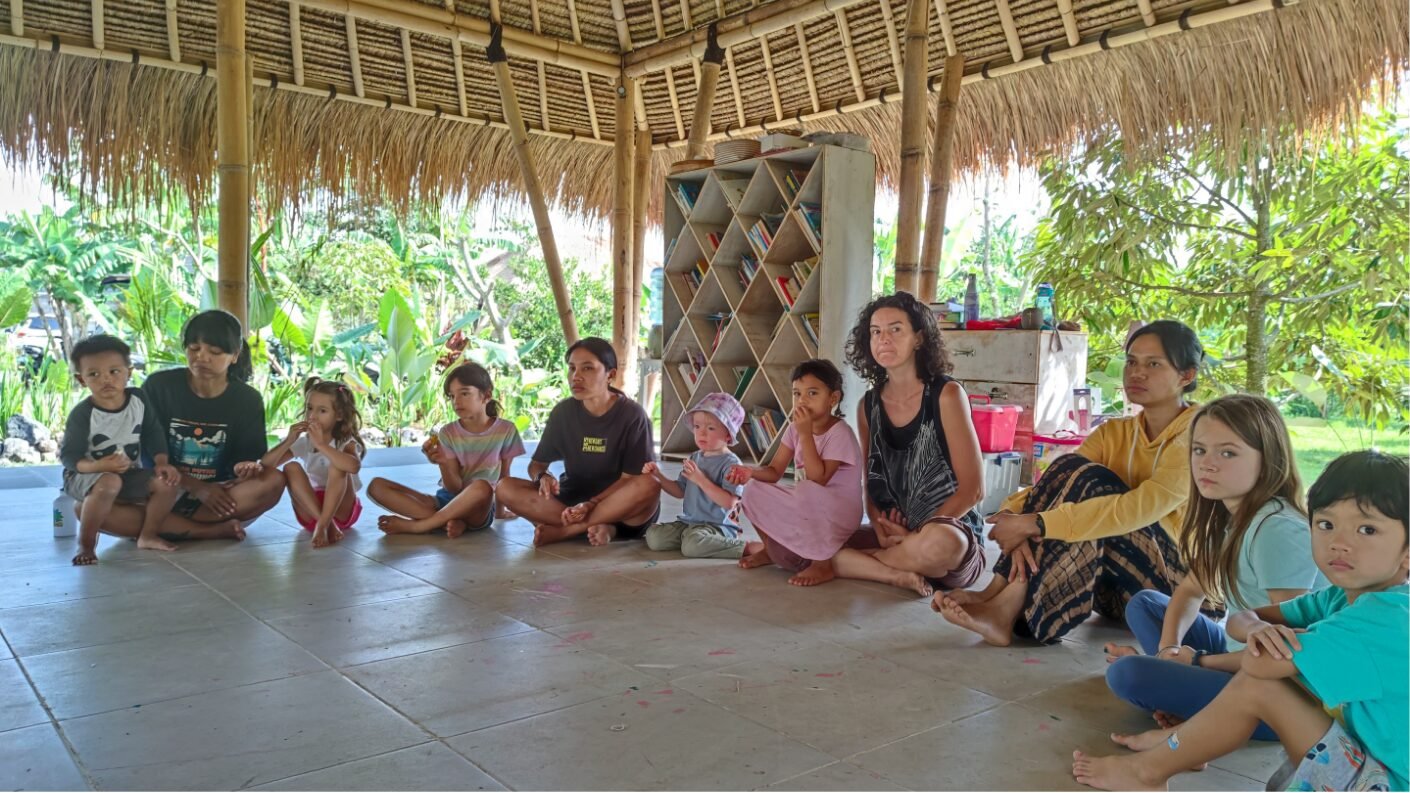
Morning Circle (music, rhythm, connection, theme introduction)
Learning Space Choice Round 1 (90-minute deep-work block)
Snack & Free Play
Learning Space Choice Round 2 (second 90-minute block)
Lunch Together (community meal, families welcome)
Rest & Integration (quiet time, gentle processing)
Learning Space Choice Round 3 (afternoon project work)
Closing Circle (sharing, celebrating, belonging)
Home
From Play to Projects
The Stick Collection
Magical Movers
Ages 2-4
Children gather sticks—long ones, short ones, bendy ones-sorting by size and building simple structures. Educators support by bringing textures to life (rough, smooth, heavy) and expanding play possibilities.
Playful Inventors
Ages 4-7
Children turn the mud kitchen into a "restaurant," creating menus and taking orders. After visiting a local warung, they integrate ideas about seating and pricing into their play.
The Mud Kitchen Restaurant
The Water Quality Investigation
Artful Investigators
Ages 7-10
Projects grow into sustained inquiry. Children design experiments, manage multi-week investigations, and present findings. They're not imitating adults—they're doing meaningful work at their developmental level.
Creative Orchestrators
Ages 10-12
Children design automated irrigation systems, researching engineering concepts and building prototypes with sensors. They test repeatedly, troubleshoot, and document their process for future students.
The Irrigation Innovation
The Early Years and Six Project Learning Spaces
How Adaptive Technology Works
Adaptive AI builds fundamental academic skills when children are truly ready, always at their developmental edge. Short daily sessions help children master essentials quickly—the AI adjusts instantly, holding the perfect balance of skill and challenge.
AI acts as a project buddy—integrating academics into work children care about. A market stall teaches percentages. An irrigation design builds ratios. A research debate develops critical thinking. Children learn algebra, grammar, and scientific method without leaving their projects.
The system tracks development precisely and helps educators design curriculum that meets each child exactly where they are. By ages 10–12, children use AI as we adults do—to accelerate research, check accuracy, and expand capability.
The Seven-Cycle Year
Seven short cycles, not three exhaustive terms. Some projects finish within a cycle, others span several. Families travel without children falling behind. Children always see the next pause on the horizon. Learning and family life move together.
Discover Open Flow
Open Flow, Bali reimagines education from the ground up—honouring how children naturally learn, protecting their innate curiosity, and nurturing whole human beings. Explore what makes us different.
Home
Flow
Wonder Arc
Emotions
feel everything,
balance everything,
and thrive